Cape Town
by mo on 11/30/2013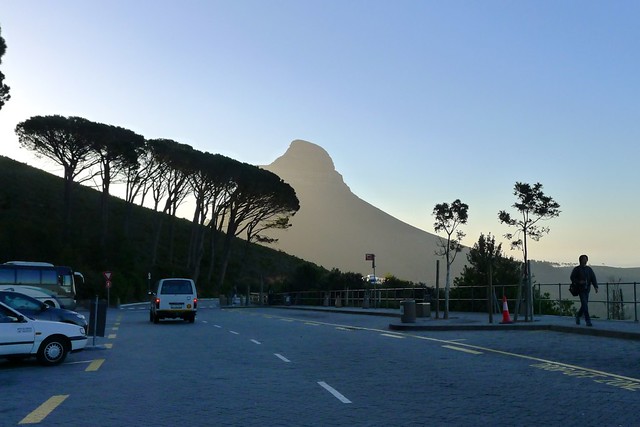
My final semester of undergrad, I did a thesis project about music taste and personality perception online (how people judge each other based on their music taste). My advisor, Karrie, encouraged me to write a paper about my study. The paper was accepted to INTERACT 2013, in Cape Town this year, so I traveled there to present it at the beginning of September. I’d never considered stepping foot in Africa before this, but Cape Town was incredible, easily one of the top places I’ve been.
GETTING THERE
Cape Town is far. From San Francisco, you fly to London, and then you have to fly the same distance AGAIN, down. 33 hours there, and you’re already jet lagged for half of that. Heathrow spa in the middle of that: highly recommended. I hired a Rikki’s to/from Cape Town airport because you can book ahead of time, online. v #future.
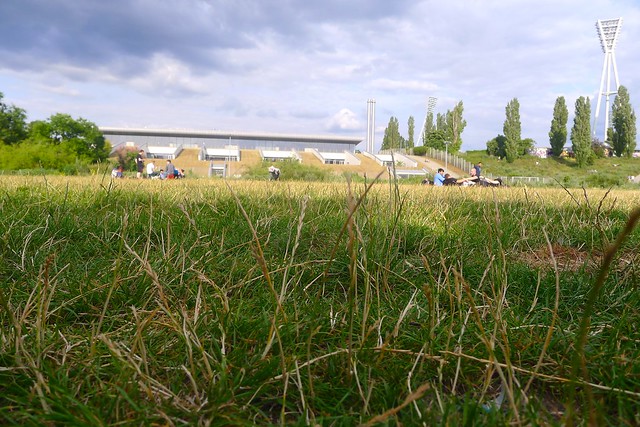
First thing I did upon arrival was grab a map from the front desk and ask which direction to run, because there were only a couple hours of sunlight left. I explored Green Point (where the old, now-empty, World Cup stadium is), and the Promenade along the water west down to Sea Point, which was full of joggers, dogs, and an outdoor gym. The seas were RIDICULOUSLY rough though that day, crashing over the 20-ft walls. First thought: explorers back in the day who would attempting to sail around the tip of Africa in these insane, shark-infested waters? Tooootally cray.
THE CONFERENCE
The next two days consumed by the conference. I’d never been to an Human Computer Interaction Conference before, and HCI was my focus as an undergrad it was interesting to meet a bunch of people who did wayyy more with it than I have yet. There was a panel by people doing UX work at African companies, explaining how hard it was to get their work taken seriously without a precedent/history of UX or fierce competition or innovation, plus a respect-your-elders culture. The local perspective was, “…here we’re kind of cool with the status quo. Whereas in the west, everything is about innovation and competition at any cost, and they worship youth rather than wisdom.”
Nobody was tweeting at this conference (??!?), so I attempted IRL to befriend the youngest, most english-speaking crew I could find, the student volunteers (locals working on masters/PhDs at University of Cape Town). The fancy boozy conference night events were at the Aquarium and Clock Tower in V&A Waterfront, which is the touristy area (think Union Square/Fisherman’s Wharf) of Cape Town.
One girl I was hanging out with complained to me that when she spent time in the US, people treated her like she was retarded and crazy, because she’s white and has the South African accent of course, which we apparently cannot handle. So proud of my country, you guys.
CHILLIN
By this point though, I was sick of seeing conference rooms and fancy dinner parties, and needed more Cape Town. I met up with a friend-of-friend, Kmo, who used to live in SF and now works at Grassroot Soccer, working in the townships of Cape Town (the poorer, undeveloped areas). She took me to lunch downtown, at a market that was very Ferry-Building like (e.g. kinda foodie), and a hipster coffee joint. She also provided me with a social life for Friday night, inviting me over to party with the new batch of interns (mostly other Americans). They were all super fun and chill and had a good recent-expat perspective on the city. There was a sort of thesis running around the group that Cape Town is kinda similar to SF in many of its best ways (geography, chill vibe, foodies and hipsters, appreciation of design, proximity to winelands), which I could kinda see. At the end of the night, we went clubbing somewhere on Long Street (the nightlife area), which was divey, super dancey, and had surprisingly good music. By the end of this night I was pretty much ready to go take a gap year with these kids.
TABLE MOUNTAIN
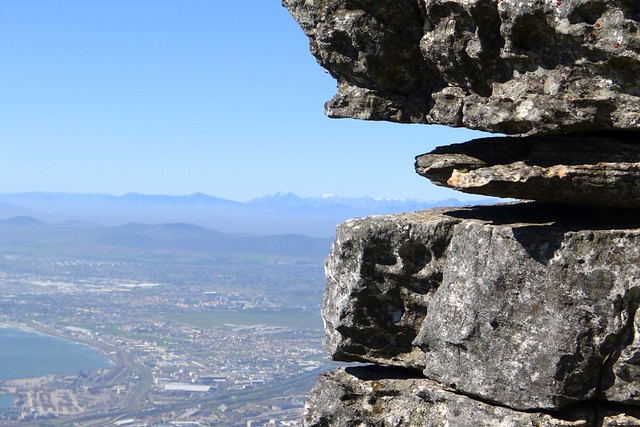
Cape Town is nestled between Table Mountain and the ocean, so it’s the dominant geographic feature visible anywhere in the city. There’s a cable car going up the mountain, but hiking up -> cable car down seemed like more fun. I hired a guide, Riaan, because he is literally the best thing in Cape Town according to Tripadvisor. When When booking a hike, Riaan asks you: 1. On a scale of 1-10, what is your fitness level? 2. How are you with heights? It became apparent very quickly why he asks these.
Our hike group was 4 of us plus Riaan — a honeymooning couple from LA, and a guy from St. Louis whose friend had recommended this particular hike. We took the India Venster route (one of the steeper ones with awesome views), which goes right below the cable car line.
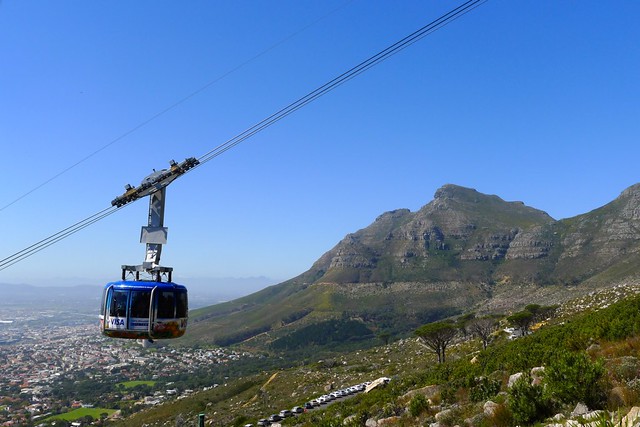
Riaan climbs this mountain pretty much daily, so he’s super knowledgeable about its history as well as every single plant on the way up. He informed us we had apparently hit the mountain on the first day of spring, because, “This is the first time I’m seeing ticks on the grass!” #yay
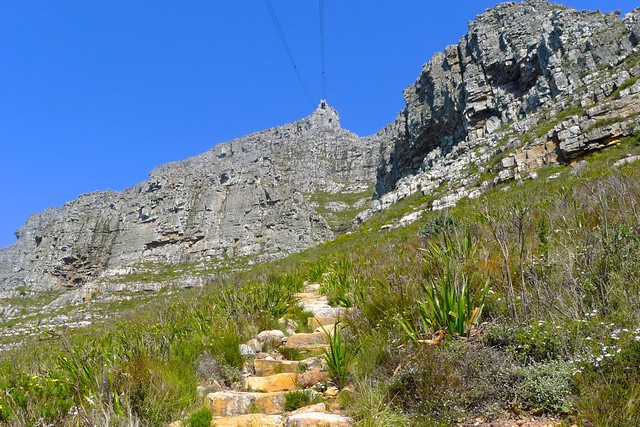
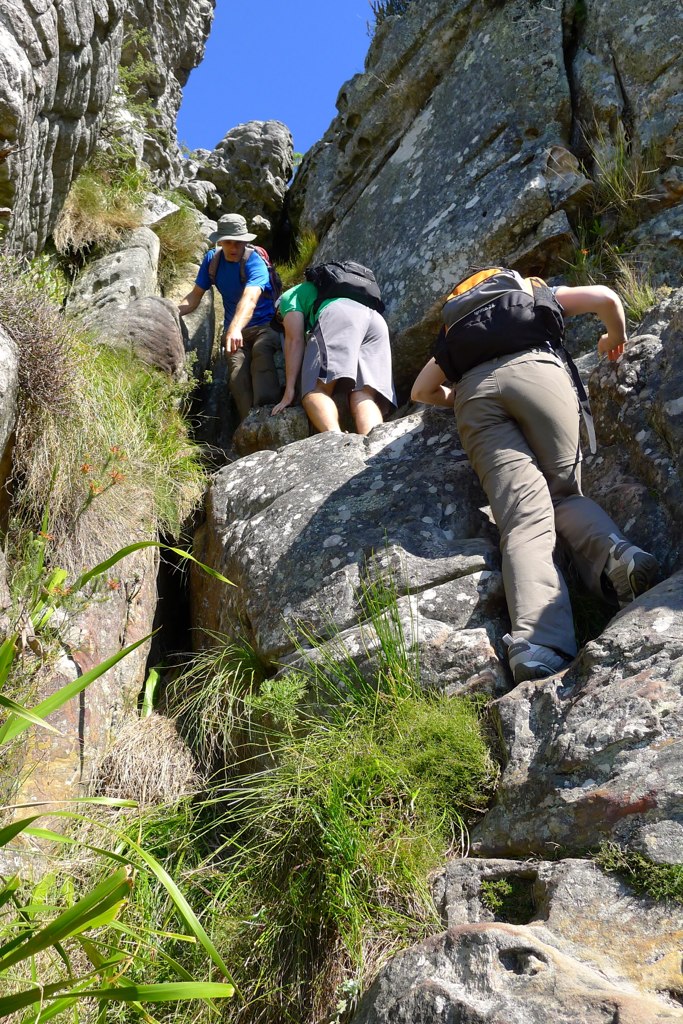
The route starts off pretty tame as a series of steps and then becomes more vertical. After the first hour, you have to start using your hands to get up, which at least makes you feel like you are actually *climbing* the mountain. Lots of scrambling where Riaan would pause to explain how to do that section, e.g. “put your left foot on this rock and then shift your weight over here while reaching for this rock..” etc. The 2 dudes discovered they were afraid of heights, the 2 ladies discovered we aren’t. Guy from St. Louis was busy clinging to rocks whilst composing the angry email in his head to his friend who had suggested the hike.
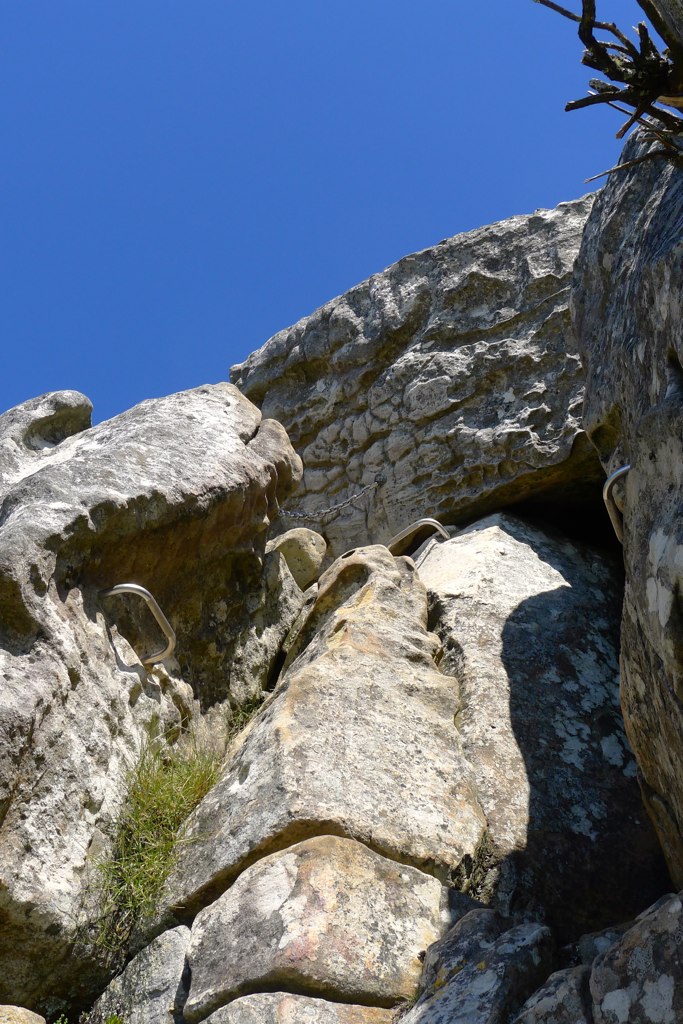
This section (below) had metal hand-holds built into the rock and chains, because apparently 6+ people died falling from this spot in a single year (Riaan helpfully didn’t give us this statistic until after we had not-died on it). We asked if anyone had ever cried at this point. Riaan said yes, an English rugby player.
The trail then curves around the mountain to the west and south sides of the mountain, overlooking Camps Bay, (resort-y area, where honeymooners were staying). The west side was pretty terrifying — slightly downhill with extreme drop-offs. The south side was really lush, quiet, full of greenery and hummingbirds buzzing about. So serene.
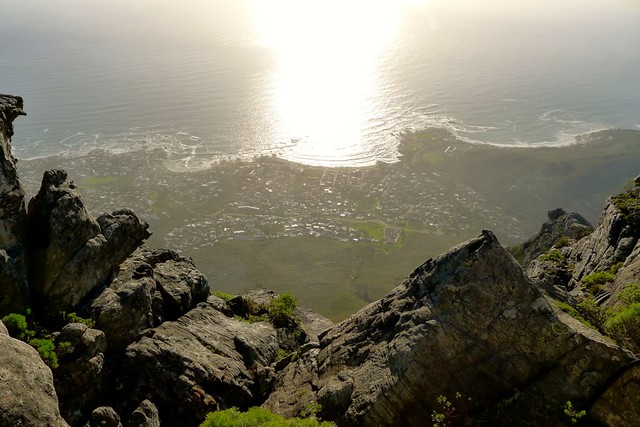
Camps Bay view.
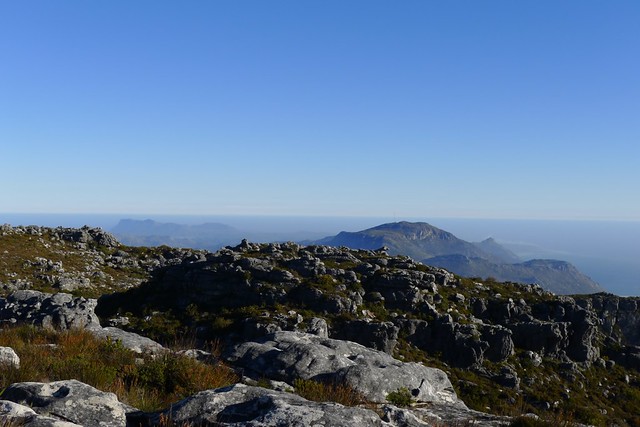
Making it to the top feels a bit weird because suddenly there is no more mountain above you, only sky <3
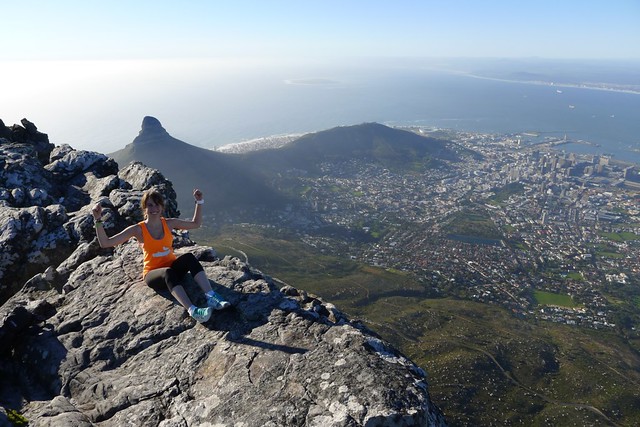
Best photo spot on the mountain. You can lie on your stomach and poke your head off the edge to look down.
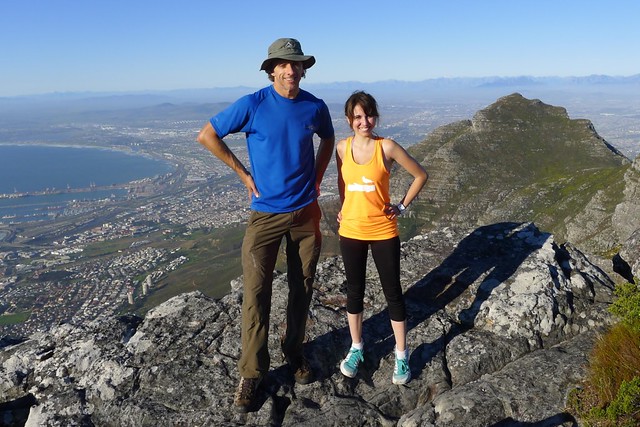
Me n Riaan.
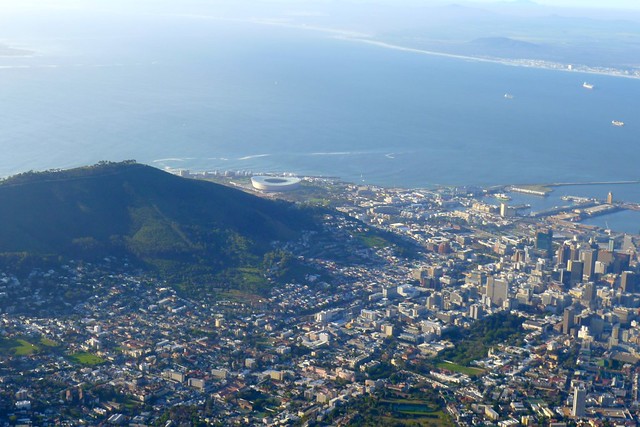
World Cup stadium, very visible, as well as downtown Cape Town. I was staying somewhere amongst the tall buildings.
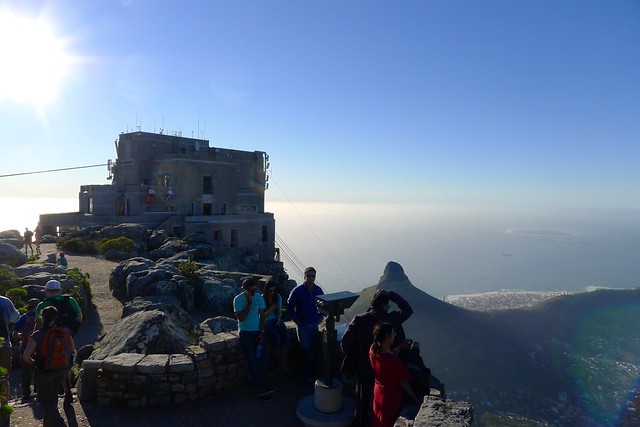
And then you just take the cable car down like all the other tourists.
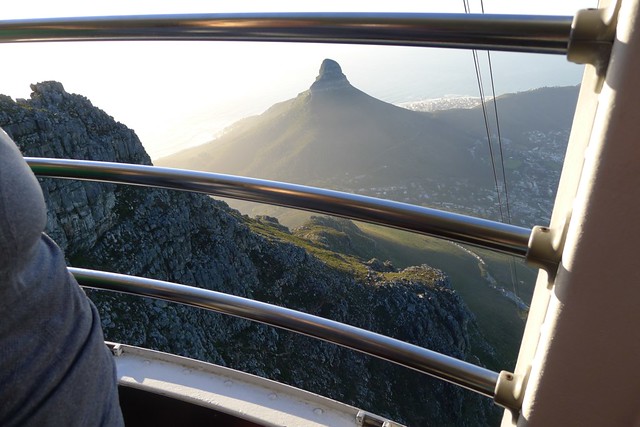
Lions Head view from cable car.
OTHER STUFF TO DO
Other than the stuff I mentioned earlier (Table Mountain hike, Long Street, V&A Waterfront), definitely check out:
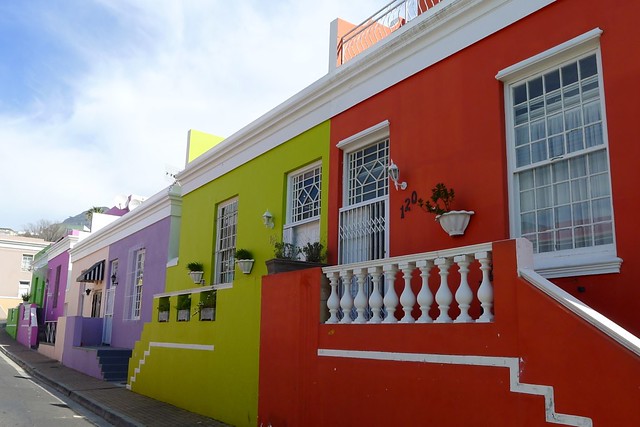
– a tour of Bo-Kaap (pictured at the bottom, the Malay quarter),
– University of Cape Town
– Kirstenbosch gardens (reeeally big botanical gardens on the side ofthe mountain).
I didn’t get to check out the winelands, go to Cape Point and see penguins, go on a safari outside the city, or hike any of the other hills/mountains around, but I hear those are things to hit up for next time. I also missed the hipstery area (called Observatory). Foursquare list version.
CULTURE SHOCK
I was only in Cape Town for 4 days, so this is first impressions stuff, but I was really shocked that people were SO FRIENDLY everywhere I went. Friendliness on a level I have never experienced before. Everyone seemed to be smiling and laughing all the time. You know how in America when you buy something at a convenience store or have to ask for directions or something, whoever is dealing with you seems vaguely annoyed and irritated simply that you exist? And that they have to talk to you? Well it was the opposite of that. I walked into a convenience store to buy some water, the guy forgot to give me change, we started giggling about it and he was like, “Thank you so much new friend, I guess I must be tired tonight!! :D”
Another instance of this was when I was taking a cab to that party, and me and the cab driver were listening to the dispatch guy frustratedly shout out driving directions to the like 40 different drivers at once. My driver was laughing SO HARD at this guy for seemingly no reason. My first reaction was thinking, “man this is kinda annoying,” and I would’ve totally tuned it out, except that my cab driver was so enthralled I started listening too, and started to find it hilarious and started recording it:
Another side to this was that people seemed to have no qualms about going to other people to ask for help. I didn’t tend to carry my phone around (and google maps was really slow there anyway… internet/cell speed left something to be desired), so I would ask people on the street for directions a lot. Usually, they didn’t know what I was asking about, but they would just walk up to someone else and unashamedly ask them for help, and they wouldn’t walk away or say “I’m busy, get lost”. . . and then you’d have TWO people helping you. No one was mad, no one seemed to be in a hurry, they seemed to actually be enjoying helping. It was bizarre.
This trip was the first evidence I’ve really found that being friendly to others can *actually* make the world a happier place (definitely thought this was bullshit before). Everyone’s happy really rubbed off on me, I was in an incredibly good mood for like a week after this trip and couldn’t stop wanting to talk to people and smile, either. Scary, I know.
SAFETY
So before traveling to Cape Town as a solo female, and researching safety, I got answers ranging from: “Don’t worry, it’s just as safe as any European city,” to, “You WILL be raped and murdered” and, of course, “Benedict Cumberbatch was kidnapped there.” This didn’t really help. And unfortunately, after spending 4 days there, I’m still completely confused about how safe it is. Here were my observations though:
– I felt safe walking around by myself in the main part of the city, safer than San Francisco. It’s clean, well lit, populated, and there’s safety officers everywhere. (People are also super well-dressed, which I think is partly where the “Europe-y feel” thing comes from.)
– I saw lots of other white girls walking around by themselves at all times of day and night.
– It’s not like San Francisco where you can just wander into the Tenderloin. There is much more geographic distance separating the different areas.
– People were constantly trying to protect me/help make sure I was safe. I couldn’t walk more than a block by myself without someone offering to call me a taxi.
– Kids would ask you for money, and I would get catcalled a lot, but pretty much no one else interacts with you on the street
– One of the locals insisted on driving me rather than letting me walk even with other men, citing, “You are more likely to get raped in this country than learn to read.”
– Locals would say send-off greetings like, “walk safe!”
– One Aussie reported being super freaked out because a guy asked him for money. . .
– Re: frightening statistics, an internet friend told me “Cape Town is to Johannesburg as Marin is to Oakland”.
The other Americans there also didn’t really know whether it was safe or not, even after spending significantly more time there. Most of them just said, “Yeah, we have no idea, but we normally just take cabs at night just in case…? Cuz we can afford it?” So I suppose, go with that. I dunno?? Don’t die. I would definitely feel fine about going back by myself, and would love to!